

If you’ve ever typed “Can I travel internationally with kids?” into a search bar while staring at a globe (or a screaming toddler), you’re not alone. The thought of navigating passports, time zones, and jet lag with children in tow can feel overwhelming. But here’s the truth: international travel with kids is absolutely possible—and honestly, it can be incredible.
I’m Marquita, a mom of twin boys who took their first international trip when they were just six months old. Since then, we’ve explored 10 countries together, from the beaches of Aruba to the temples of Thailand and even the mountains of Peru. I’ve flown solo, navigated customs questions, survived jet lag, and figured out how to travel smarter, not just harder.
In this post, I’ll break down everything you need to know to confidently answer the question, “Can I travel internationally with my kids?” We’ll cover what documents you need, whether you need special permission to travel solo, how to choose the right destination, what gear makes life easier, and how to keep everyone (including yourself) sane at 35,000 feet.
Let’s get into it—because motherhood doesn’t have to mean missing out on the world.
Is It Legal to Travel Internationally With Kids?


Traveling internationally with kids is not only legal—it’s more common than you might think. But the laws, requirements, and practicalities can vary depending on your child’s age, your destination, and whether you’re traveling solo or with the other parent.
Can You Travel Internationally With a Baby or Toddler?
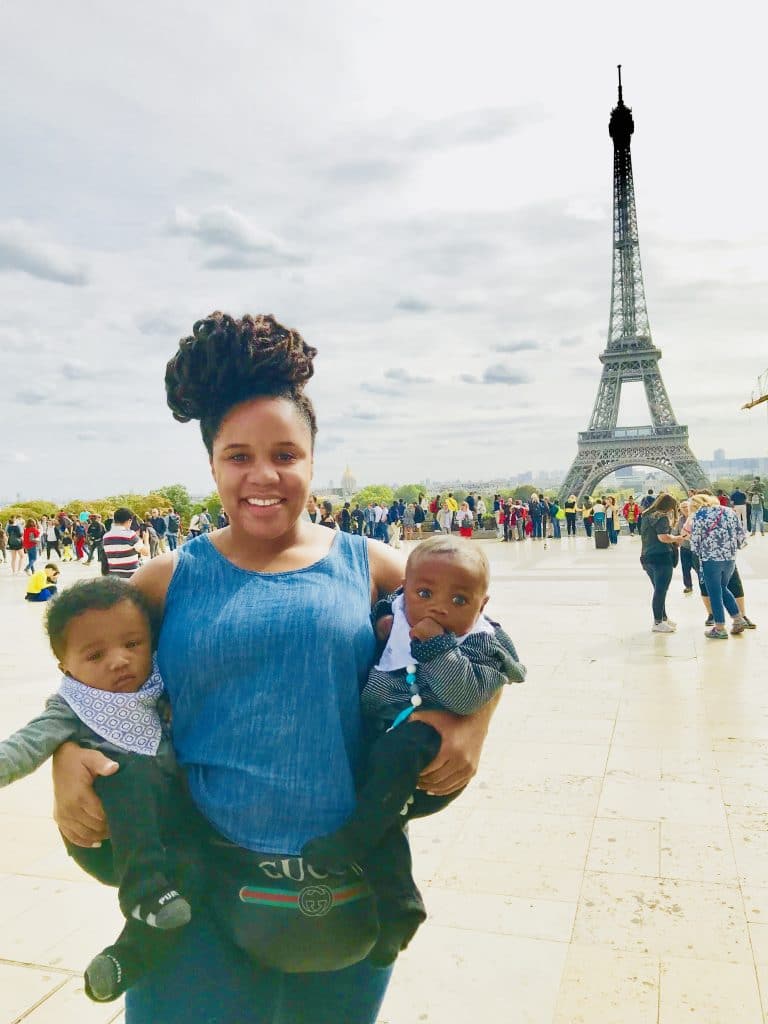
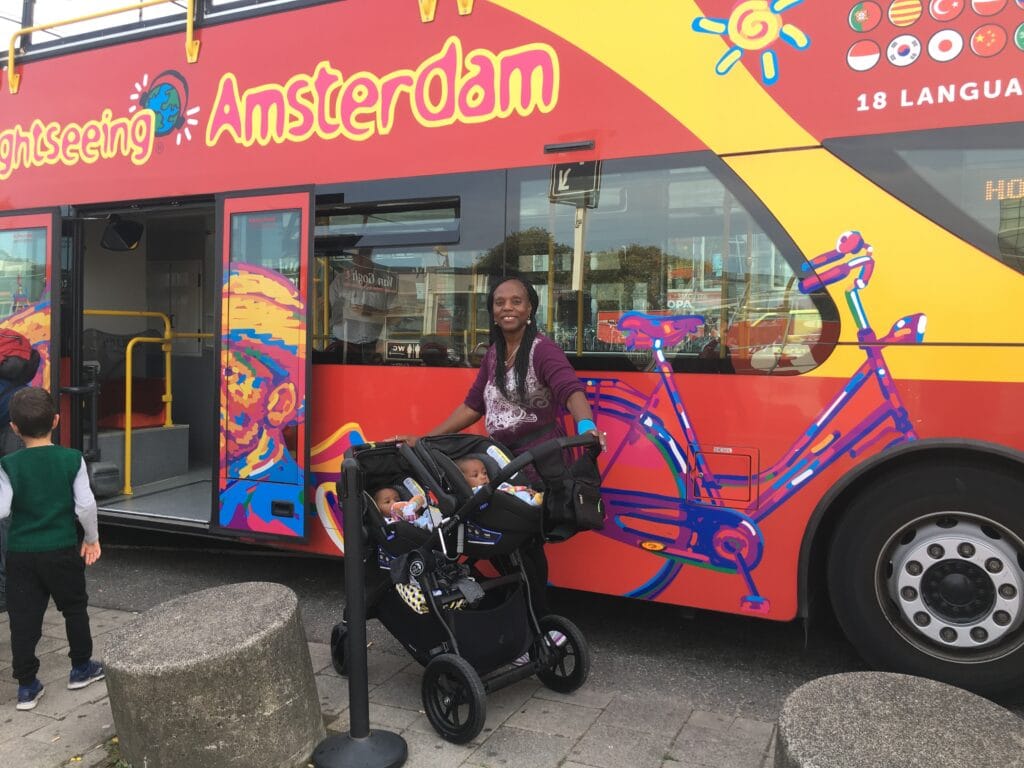
Yes, you absolutely can. Airlines typically allow infants to fly internationally as early as 2 weeks old, though some recommend waiting until your baby is at least 6 to 8 weeks, especially for long-haul flights. In my case, I took my twin boys on their first international trip at just six months old—Paris and Amsterdam.
But here’s what I learned quickly: not all cities are created equal when you’re pushing a double stroller. Paris was beautiful, but with its narrow sidewalks, stairs, and tricky metro access, it wasn’t the easiest to navigate. Getting in and out of Ubers or taxis with two babies and a bulky stroller was frustrating at best.
In contrast, Amsterdam was a dream. Their trams were stroller-friendly, sidewalks were wide and flat, and the city was built for walking. That experience taught me that choosing the right destination isn’t just about what you want to see—it’s about what makes your life easier when you’re on the move with kids.
Do You Need a Notarized Letter to Travel With Kids?
This is one of the most common questions parents ask, for good reason. If you’re traveling internationally with your child without the other parent, you may be asked to show proof that you have permission to do so.
Some countries and airlines require a notarized letter of consent from the non-traveling parent. I’ve traveled internationally without my husband, like when I flew with our twins to Amsterdam and Paris with just his aunt, and I wasn’t asked for documentation. But I’ve heard enough stories to know that not everyone gets waved through that easily.
My advice? Be prepared. A notarized letter isn’t always required, but having one can save you major stress. It should include:
- Child’s full name and date of birth
- Traveling parents’ names and passport info
- Non-traveling parent’s name and consent
- Dates and destinations
- Notarization
What Documents Are Required for International Travel With Kids?

Required Paperwork Checklist
Here’s what you absolutely need for every international trip with kids:
A valid passport for every traveler—including infants and toddlers. There are no exceptions. Babies need their own passports to leave and re-enter the U.S.
👉 Click here for official passport requirements for children under 16 👈
Note: Both parents (or legal guardians) must appear in person to apply for a child’s passport and sign the application. If one parent can’t be there, you’ll need additional legal documentation to proceed.
Your valid passport as the traveling parent or legal guardian. In my experience, I’ve never been asked for a driver’s license—just my passport—so don’t stress about carrying multiple forms of ID for international border checks.
Notarized letter of consent, if traveling without the other parent (see the previous section for details).
Visas, if your destination country requires them for U.S. citizens.
👉 Use this official tool to check visa requirements by country 👈
Return or onward ticket, depending on your destination (some countries ask for proof that you’re not staying indefinitely).
Vaccination records, if applicable. Some countries require proof of certain vaccinations, like yellow fever.
Pro Tip: Make both digital and paper copies of each document. I keep them organized in a travel folder and store digital backups in my email and cloud drive—just in case.
Choosing the Right Destination for International Family Travel


Where you go sets the tone for everything else—how you pack, how you fly, and how easy (or difficult) your days will be. And when you’re traveling with kids, picking the right destination can make or break your experience.
Match the Location to Your Child’s Age
One of the biggest lessons I’ve learned after traveling to 10 countries with my boys, starting when they were just six months old, is that the destination has to match the season of parenting you’re in.
Infant stage: When we took our first big international trip, the boys were six months old. We chose Amsterdam and Paris. Amsterdam was a breeze- wide sidewalks, stroller-friendly trams, and a walkable layout made it easy to get around with a double stroller. Paris, on the other hand? Beautiful, yes. But narrow sidewalks, busy roads, and stair-heavy metro stations made it a logistical nightmare. I spent way too much time struggling to fold strollers and haul babies in and out of taxis.
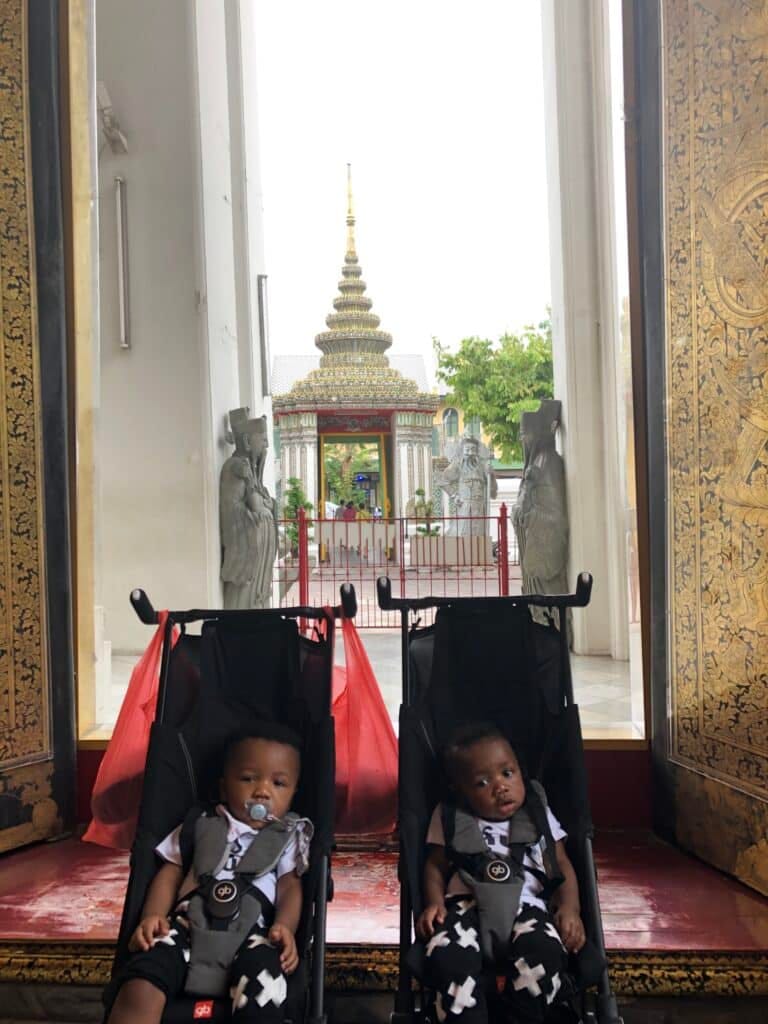
Toddler stage: By the time the boys were around 13 months, we went to Thailand. This time, we came prepared—we brought compact GB Pockit strollers instead of the bulky double stroller and hired a private driver. Total game-changer. In a city like Bangkok, where crowds and traffic are intense, having a personal driver made transitions smoother and safer, and it meant the car seats were already installed and ready to go.
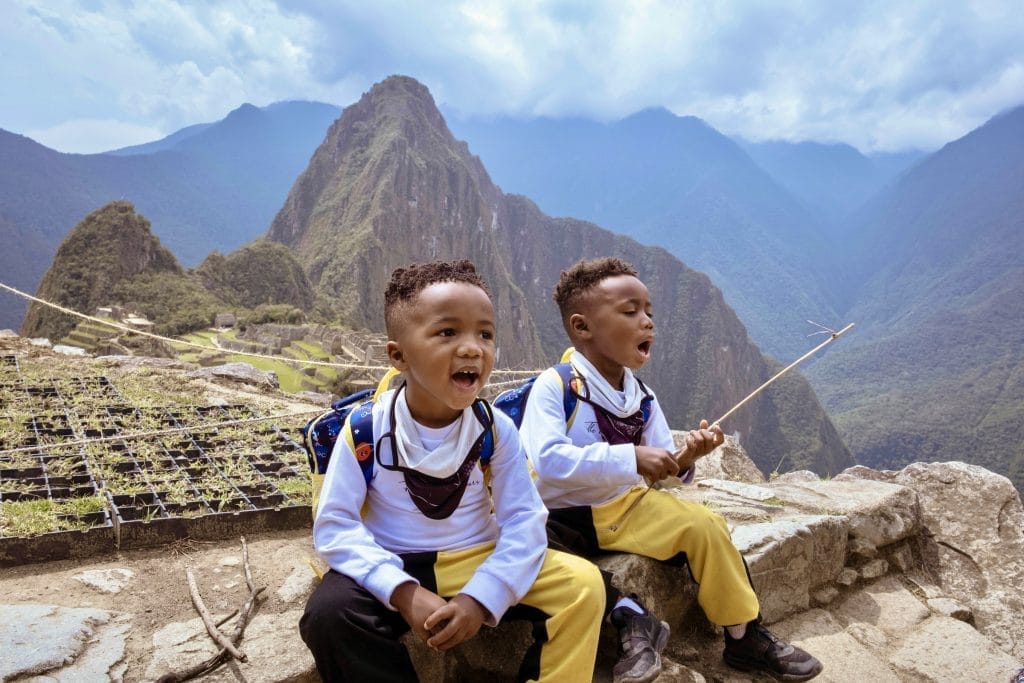
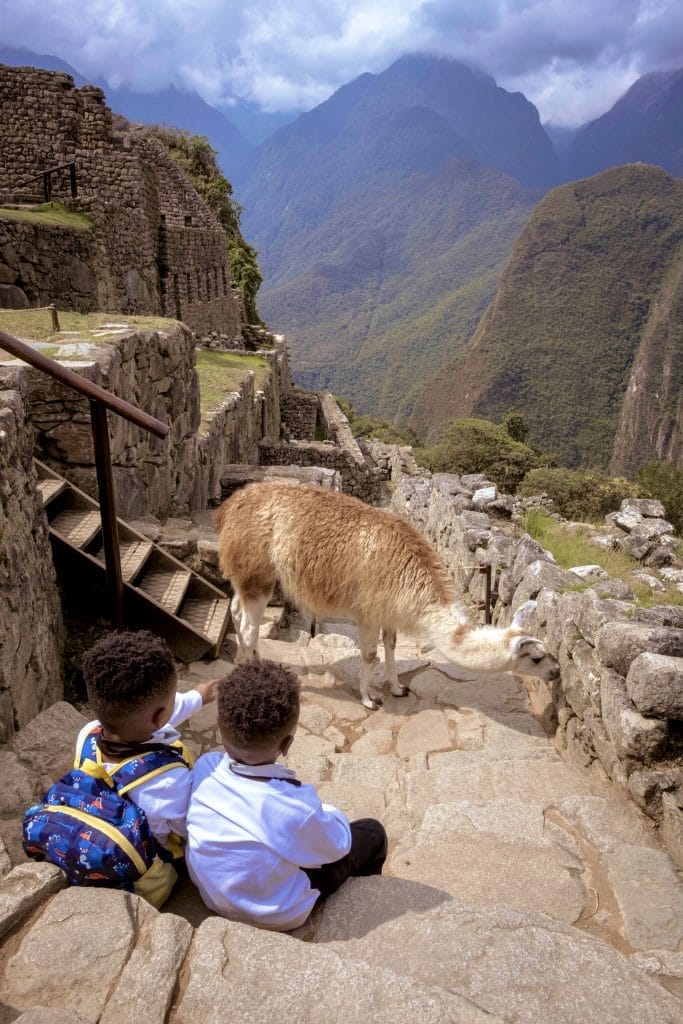
Preschoolers and up: As the boys got older, we started pushing the boundaries a bit. At age four, they hiked part of Machu Picchu with us in Peru. That might sound intense, but because we were already an active family (lots of neighborhood walks and light hikes), they were ready for it. With older kids, you can lean into adventure more, especially if you ease into it gradually.
The takeaway? Choose a place that complements your child’s mobility, temperament, and stamina, not just your bucket list. You’ll have a lot more fun when your destination works with your kids, not against them.
Below are some of my favorite international destinations with my kids:
When to Get a Local Guide


If you’re visiting a destination where logistics are tricky or the language barrier might be an issue, hire a local private guide. I can’t stress this enough.
In Brazil, and Colombia, we used private guides, and they were lifesavers. They helped carry bags, interacted with the boys, kept us on schedule, and added so much cultural context to our days. My kids still remember our guides by name—and not just because they helped entertain them, but because they became part of the experience.
Even better, guides often come with their own vehicle, so you can leave your gear in the car and avoid hauling everything around all day.
If your budget allows, a private guide is one of the best investments you can make when traveling internationally with kids, especially in places that aren’t stroller-friendly or require a lot of transportation between sites.
How to Handle Car Seats When Traveling Abroad
Know the Laws Where You’re Going
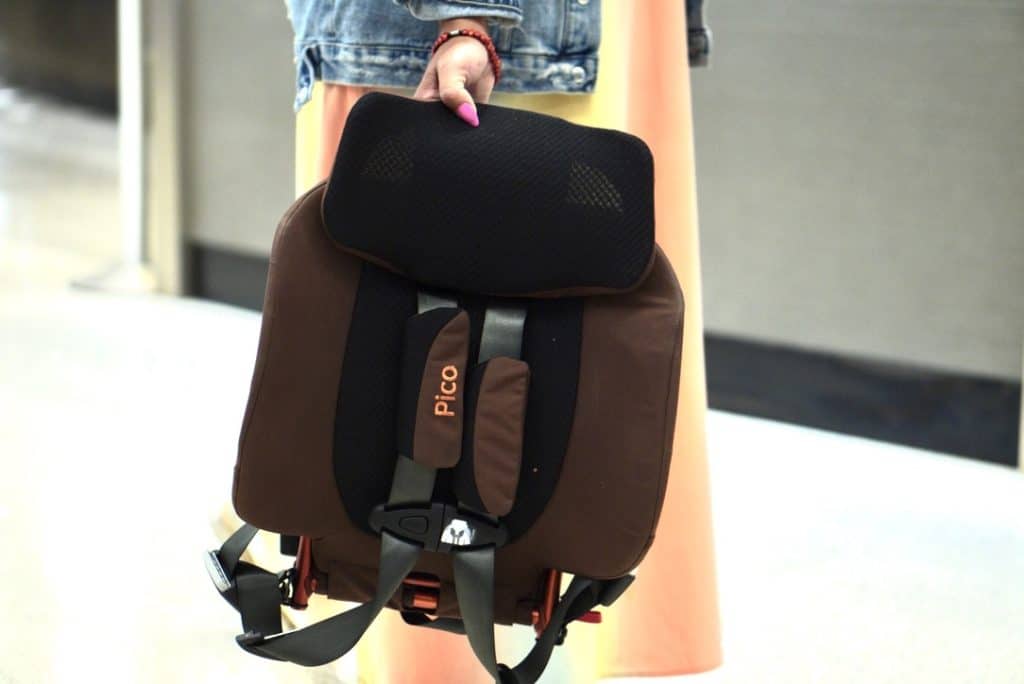
Before you fly, check the car seat laws in your destination country. Some places have strict requirements; others are surprisingly relaxed. But just because a country doesn’t require a car seat doesn’t mean you shouldn’t use one.
When my twins were still in infant and convertible car seats, I always brought our own. As they got older and transitioned to booster seats, I started renting them more often. Still, I’m very specific when renting. I always call ahead to confirm the exact type of car seat, not just check a box online.
👉 If you’re still debating, check out my
CARES Harness vs. Car Seat for Flying with Kids 👈
Tips for Flying Internationally With Kids


Once your destination is set and documents are ready, it’s time to tackle the flight itself. And let’s be real—this is the part that stresses most parents out. Long-haul flights, time changes, restless toddlers…it’s a lot. But after more than a dozen international trips with my twins, I’ve got a system that works.
Booking Flights and Seats
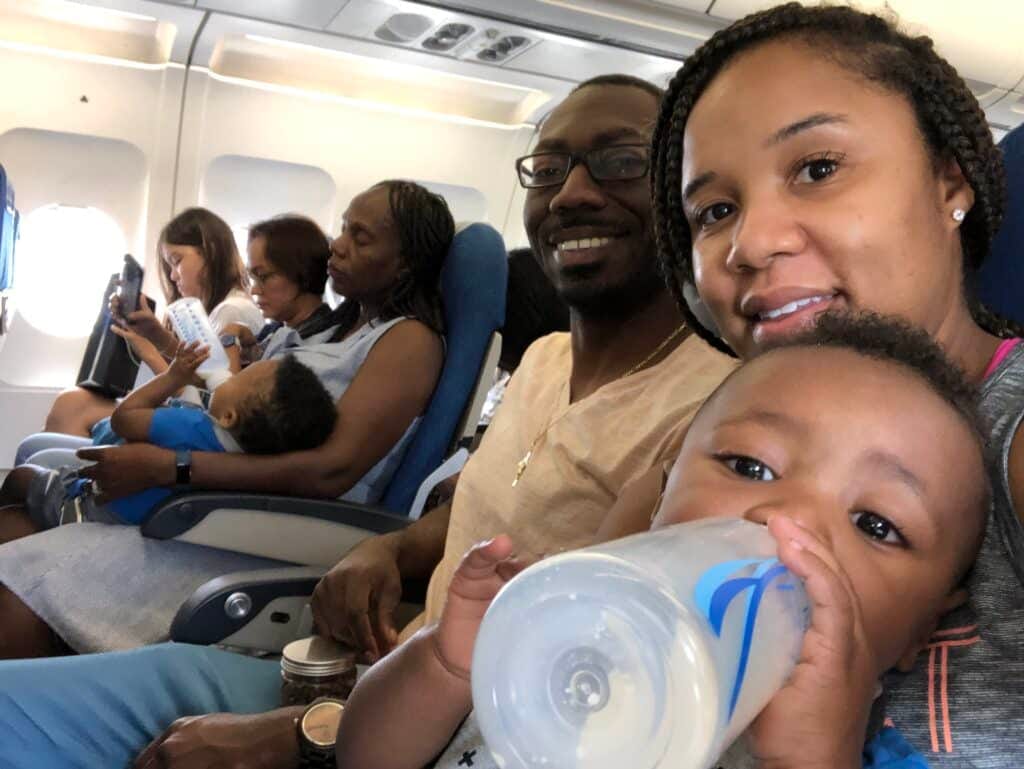
One of the biggest decisions is whether to book your child their own seat or keep them as a lap child (allowed under age two on most airlines). That might sound budget-friendly, but let me tell you—holding a baby for 8+ hours is no joke.
When my twins were under two, we often bought one seat and registered the other as a lap child. To make this work, we’d book the back row in the middle section (usually five seats across) and try to leave one middle seat empty between us. That way, if the flight wasn’t full, we had extra space without paying for two full seats.
Pro tip: Most people won’t pick a single seat surrounded by a family with toddlers.
If your child is old enough or you can swing the cost, having their own seat is absolutely worth it, especially for overnight flights.
Bulkhead seats with bassinets are a lifesaver for infants. You’ll need to call the airline to request it (you can’t book it online), but it’s worth the effort. Most airline bassinets have a weight limit of 20–25 pounds, so be sure to check with your airline in advance to confirm availability and exact requirements.
Getting Through the Airport

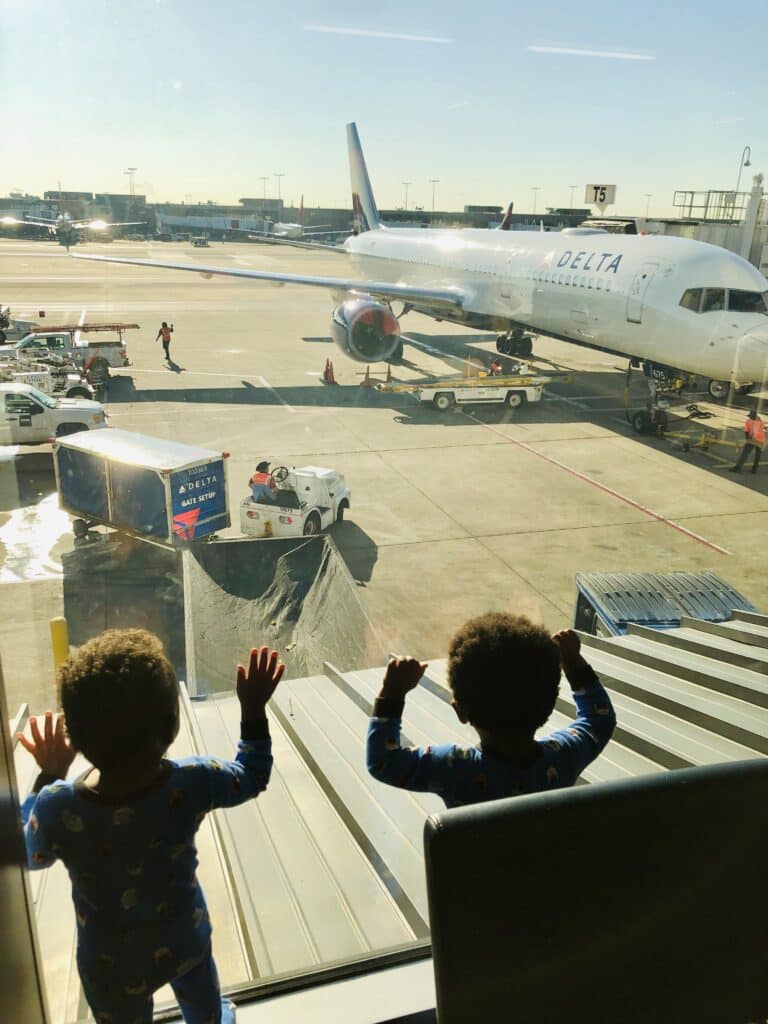
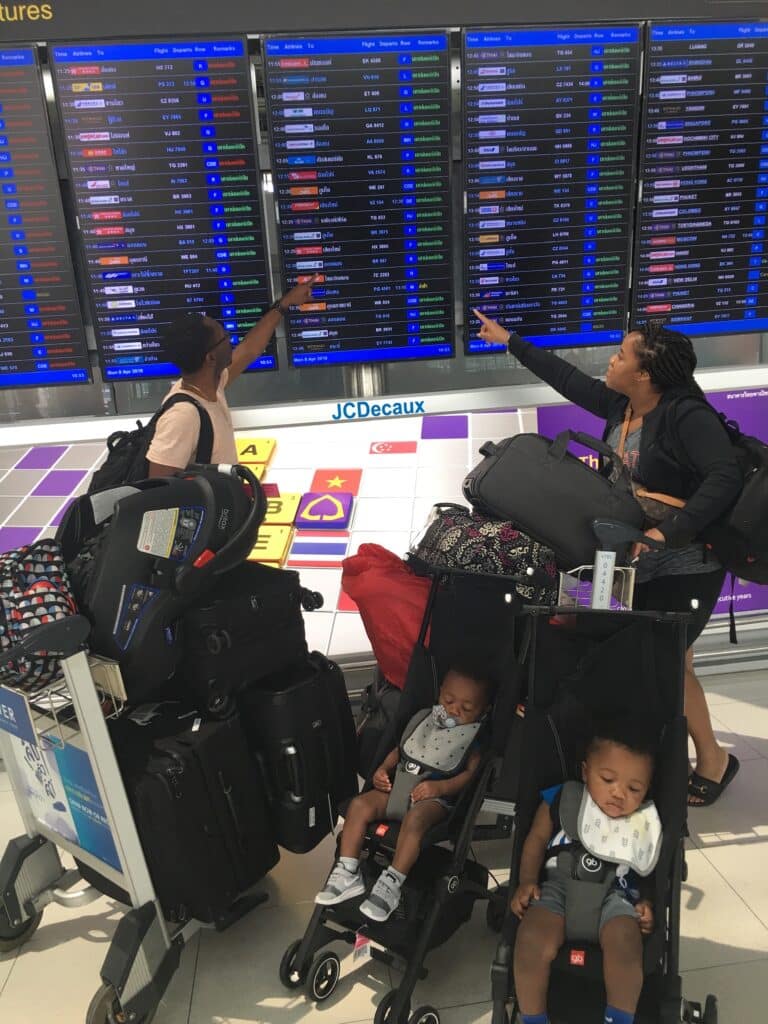
You’ll want to think through every step of the airport process, especially when you have gear.
When we flew to Paris with a bulky double stroller, it was a logistical nightmare. Narrow walkways, stairs, and train stations weren’t made for something that size. Even though it wasn’t a side-by-side stroller, it was still too cumbersome for a city with limited space and lots of public transit. By the time we reached our hotel, I was exhausted—and not from jet lag.
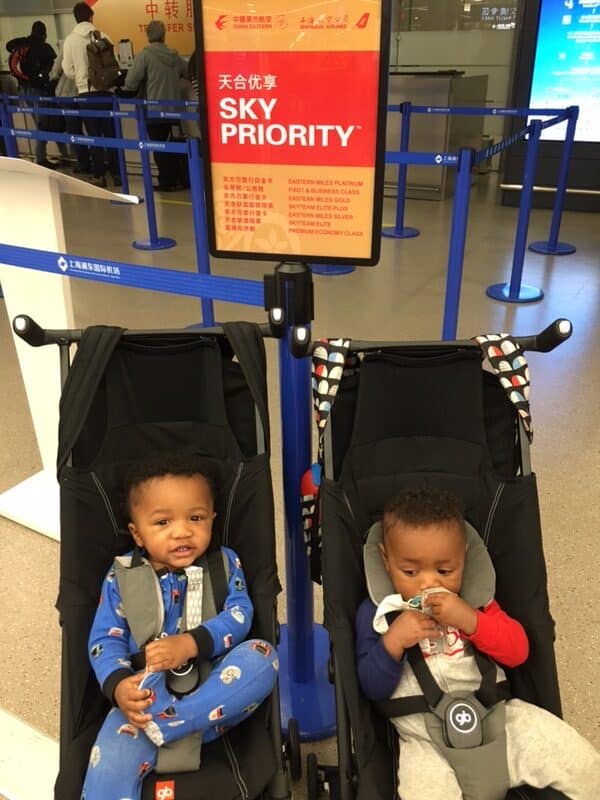
In contrast, when we went to Bangkok, we brought our GB Pockit strollers—compact, lightweight, and easy to fold with one hand. It made airport navigation and city touring so much easier.
Here’s what helps at the airport:
- Arrive early, especially if traveling with babies or checking car seats
- Use curbside check-in if it’s available (fewer lines!)
- Use a compact travel stroller that fits in the overhead bin. This lets you roll your child right onto the plane, as well as avoiding the need to wait at the gate for a stroller to be returned.
In-Flight Survival Guide

Now for the flight itself: your goal is to keep your kids entertained, fed, and ideally…asleep. Getting my kids to sleep on a long-haul flight is so important to me that I wrote a full blog post on it.
Our favorite travel item by far is the JetKids Bed Box. It turns the airplane seat into a flat bed, perfect for long-haul flights. When my boys can lie down and sleep for a solid block of time, everyone has a better flight.
👉 Review my complete guide to the best airplane bed
to decide which one is best for your family 👈
Other must-haves:
- A small “activity bag” for each child with stickers, snacks, crayons, and a tablet with headphones.
- A change of clothes (for you and your kid—trust me).
- Snacks, snacks, and more snacks. Airline food isn’t kid-proof.
- Wipes and hand sanitizer on deck at all times.
And for jet lag? I try to keep us awake during daylight hours once we land, even if that means a midday nap to bridge the gap. A little sun exposure and movement help everyone adjust faster. If we’re on a longer trip, I sometimes start shifting their bedtime back toward home time a day or two before we return.
👉 More travel-tested tools 👈
Best Airplane Beds
Kid’s Travel Essentials
21 Tips for Flying with Toddlers
Bonus Tip: Make re-entry to the U.S. easier
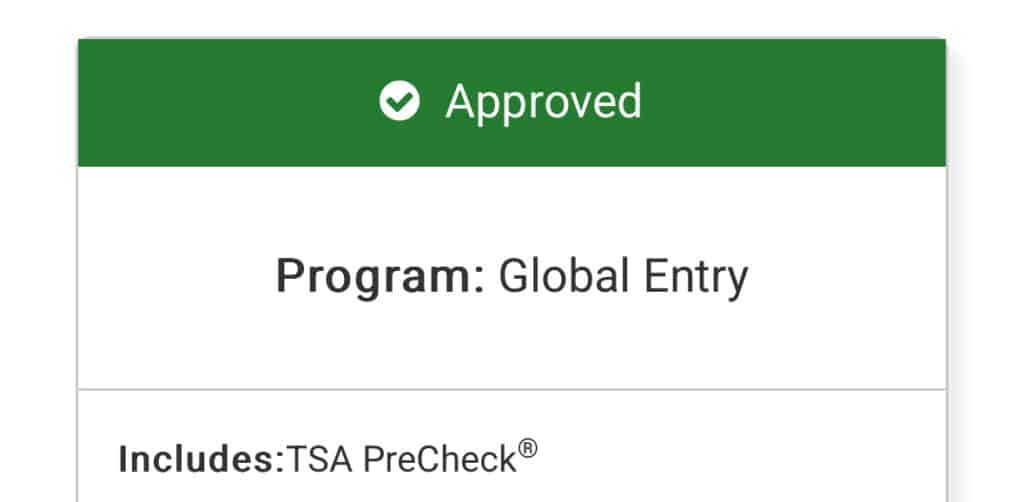
If you’re considering Global Entry, do it. While each child still needs their own application, they don’t have to pay the fee if a parent is applying or already has Global Entry. You can apply together as a family, and once approved, it can save you hours when returning to the U.S. Global Entry also includes TSA PreCheck, which means shorter lines, no removing shoes, and a faster security process—especially helpful when you’re juggling kids and carry-ons.
If Global Entry is not in the budget, Mobile Passport is a free app on your phone and can be used at 50+ airports and ports for expedited customs.
Is It Worth Traveling Abroad With Children?

Let’s be honest—traveling internationally with kids isn’t always easy. There are nap schedules, meltdowns, and moments where you wonder if it would’ve just been better to stay home. But is it worth it?
Absolutely.
Why It’s Not as Hard as You Think
When I first took my twins abroad at six months old, I had no idea what to expect. But that trip—and every one since—showed me that kids are incredibly adaptable. They don’t need luxury. They don’t need perfectly planned itineraries. They need love, attention, and space to explore. And travel offers all of that.
Over the years, we’ve visited 10 countries. We’ve lounged on beaches in the Caribbean, squeezed onto crowded trams in Europe, and even hiked up to Machu Picchu when the boys were just four years old. It sounds ambitious, but we got there by building confidence over time. One successful trip gave us the courage to try another.
When you start early, your kids learn how to be travelers. They learn how to wait in line, adapt to new environments, and sleep in different time zones. They become flexible. And let’s be real—so do you.
Benefits Beyond the Vacation
Yes, there are tantrums and tough moments. But the memories? They last.
Traveling together has given us:
- Core memories—my boys still talk about the guides we had in Rio and Colombia
- Bonding time—no distractions, just us figuring things out together
- Life skills—they’ve learned how to be patient, try new foods, and engage with different cultures
And the best part? They love it. They don’t see travel as something scary or overwhelming—they see it as an adventure. And I love that I’ve been able to give them that mindset so early in life.
Final Tips for International Travel With Kids
By now you’ve got the big pieces covered—documents, flights, destinations—but sometimes it’s the little things that make the biggest difference. Here are the final, mom-tested tips that help me survive (and actually enjoy) international trips with my kids:
Pack light. I know it’s tempting to bring everything “just in case,” but trust me—less is more. Especially if you’ll be hopping on trains or using public transportation. You can buy diapers and wipes abroad. What I always bring from home: formula and any specific medications my kids might need.
👉 Need more details on what to bring and how to travel light? 👈
Kid Travel Essentials Checklist
Minimalist Packing List
Don’t overschedule. One to two activities a day is plenty. Leave room for naps, snacks, and those unplanned moments that end up being the most memorable. Over-scheduling leads to overtired kids and stressed-out parents.
Adjust sleep slowly. On arrival, get outside, keep them awake during daylight, and aim for a full night’s sleep to reset. If your trip is longer, start shifting bedtimes closer to your home schedule a couple of days before you return.
Embrace flexibility. Sometimes a tantrum means skipping the museum and finding a gelato shop instead. That’s okay. Travel with kids doesn’t have to be perfect to be meaningful.
You don’t have to do it all alone. Hire a private guide, book a driver, or ask for help. Especially if you’re traveling solo, those extra hands make a big difference—and sometimes become the most special part of the trip.
Start small. You don’t have to jet off to Europe or Asia on your very first trip. Your first international experience can be somewhere closer, like Mexico or Canada, just to get your feet wet and get a feel for the process. That’s exactly what we did. We took a trip to Puerto Rico (not technically international, but a totally different travel rhythm) about a month before flying to Paris and Amsterdam. It gave us a chance to practice traveling as a family without the full pressure of customs and long-haul flights.
Conclusion


So, can you travel internationally with kids?
Absolutely. You don’t need to be a supermom. You don’t need to have it all figured out. You just need to prepare, stay flexible, and trust that it can be done—because I’ve done it, many times, starting when my boys were just six months old.
From choosing the right destination to packing light, navigating airport lines, and handling jet lag like a pro, international family travel is more doable than most parents think. Yes, it takes more planning. But the memories you’ll make? The confidence your kids will gain? The sense of adventure they’ll carry for life? It’s worth it. Every time.
And if you’re standing at the edge of that decision—wondering if now is the time to take the leap—I’ll be the one cheering you on from the boarding gate.
You’ve got this.
⭐ More Tips on Traveling with Baby and Toddlers ⭐
Getting Through Airport Security With Baby: Step-by-Step Guide
Can I Travel Internationally With Kids? What Parents Need to Know
Traveling with a Newborn: Tips for Flying During Baby’s First Year
CARES Harness vs. Car Seat for Flying with Kids: What’s Best for Your Family?
Traveling With Kids: Biggest Challenges + Smart Fixes
What’s the Best Age to Travel With Kids? Real Talk for Moms
Pros and Cons of Traveling with Kids (By Age Group)
A Complete Guide to the Best Toddler Airplane Beds
25+ Toddler Travel Essentials: Traveling with a Toddler Checklist
Best Toddler Travel Beds- Ultimate Kid Portable Bed Guide
15 Tips to Help a Toddler Sleep on the Plane
21 Tips for Flying with Toddlers From a Traveling Mom
27 Beach Essentials for Toddlers and Babies


